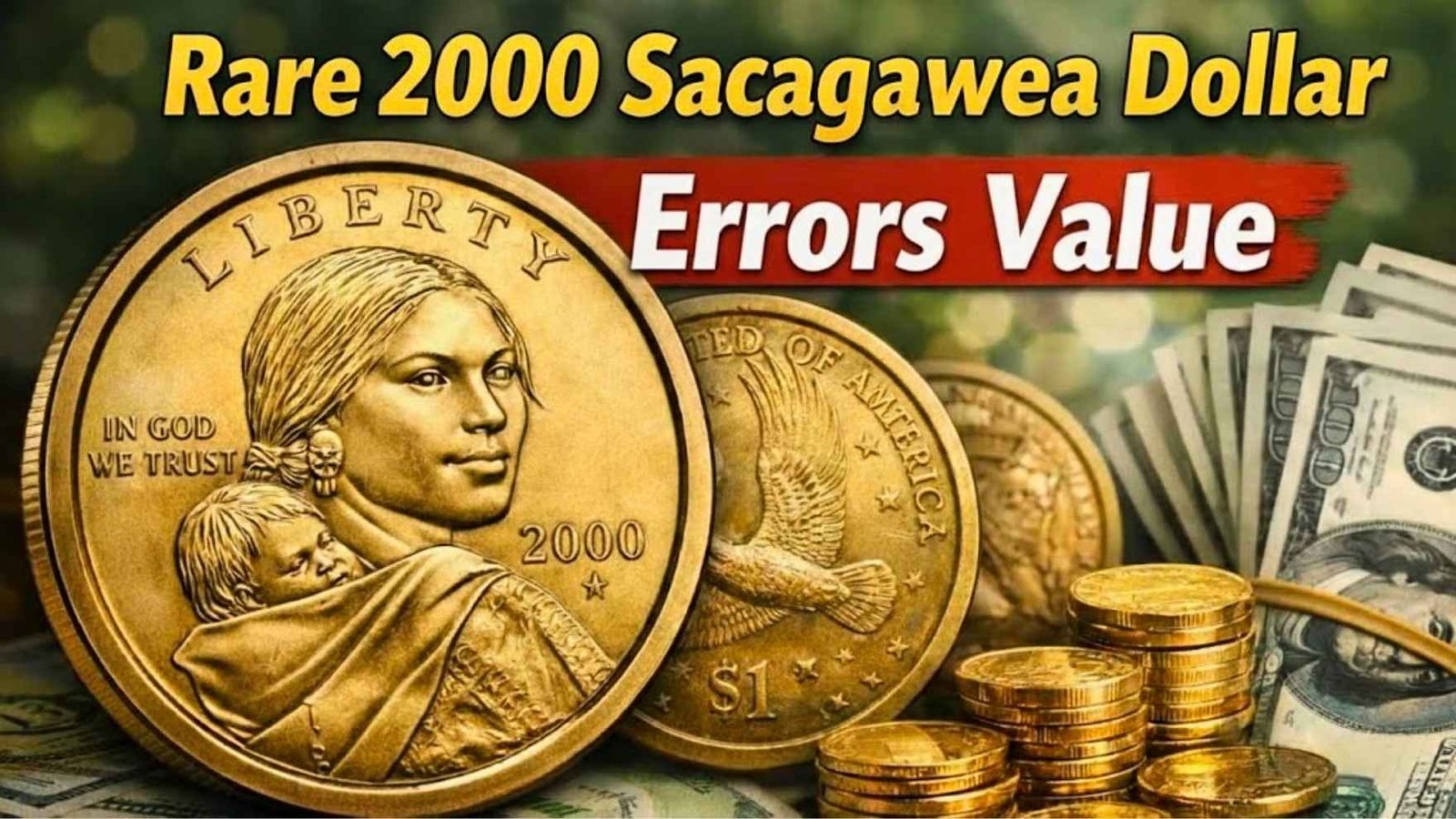
The Sacagawea Dollar, first released in 2000, was designed to honor Sacagawea, the Shoshone woman who guided Lewis and Clark during their expedition. Featuring her portrait with her infant son on the obverse and a soaring eagle on the reverse, the coin was intended to replace the Susan B. Anthony Dollar. While most Sacagawea Dollars are common and worth only face value, certain rare errors and varieties from the year 2000 have become highly collectible. In 2026, these coins continue to attract attention from collectors and investors alike.
The Launch of the Sacagawea Dollar
The Sacagawea Dollar was introduced with great fanfare in 2000. Its golden color, created by a manganese-brass alloy, set it apart from other coins. Despite high hopes, the coin struggled to gain popularity in everyday commerce. However, it quickly became a favorite among collectors, especially when rare errors and varieties began to surface.
The Cheerios Dollar
One of the most famous varieties is the “Cheerios Dollar.” In 1999, the U.S. Mint partnered with General Mills to distribute 5,500 Sacagawea Dollars in Cheerios cereal boxes as a promotion. These coins feature a prototype reverse design with enhanced eagle tail feathers. Because of their rarity and unique design, Cheerios Dollars can be worth thousands of dollars today.

Mule Error Coins
Another legendary error is the Sacagawea Dollar–State Quarter mule. These coins were mistakenly struck with a Washington Quarter obverse paired with a Sacagawea Dollar reverse. Only a few examples are known, making them extremely rare and valuable. Mule errors have sold for tens of thousands of dollars at auction, cementing their status as prized collectibles.
Other Error Varieties
Beyond the famous mule and Cheerios Dollar, other error varieties exist. These include off-center strikes, doubled dies, and coins struck on wrong planchets. While less dramatic, these errors are still highly collectible and can command strong premiums depending on rarity and condition.
Value Trends 2000–2026
Over the past two decades, values for rare Sacagawea Dollar varieties have remained strong. Common circulation strikes are worth only face value, but rare varieties like the Cheerios Dollar and mule errors have shown steady growth. In 2026, collectors continue to pay premiums for high-grade examples, especially those certified by professional grading services.

Collecting Tips
For those interested in Sacagawea Dollars, condition is critical. Coins should be stored properly to prevent tarnish or damage. Proof and special issues are best preserved in their original packaging. Beginners may start by collecting circulation strikes, while advanced collectors often seek out rare varieties and error coins. Building a complete set of Sacagawea Dollars, including later Native American Dollar designs, can be a rewarding project.
Investment Potential
Rare Sacagawea Dollars are not only collectibles but also investments. As demand continues to grow, prices for key varieties have steadily increased. While not every coin will yield a fortune, the right piece can be a valuable addition to any portfolio. Collectors who understand the market trends and focus on rarity often see strong returns over time.
Key Highlights
- The Sacagawea Dollar was first minted in 2000 to honor Sacagawea.
- The Cheerios Dollar features a prototype reverse and can be worth thousands.
- Mule errors combining a Washington Quarter obverse with a Sacagawea reverse are extremely rare and valuable.
- Other errors include off-center strikes, doubled dies, and wrong planchet coins.
- Values in 2026 remain strong for rare varieties and high-grade examples.
Final Words
The 2000 Sacagawea Dollar holds a special place in modern U.S. coinage. While most examples are common, rare varieties like the Cheerios Dollar and mule errors have become legendary among collectors. In 2026, these coins continue to attract attention, proving that even modern issues can hold hidden treasures. Whether you are a seasoned numismatist or a beginner, exploring Sacagawea Dollar errors and varieties offers both enjoyment and the potential for discovery. With patience and knowledge, you may uncover a coin that is worth far more than you ever imagined.