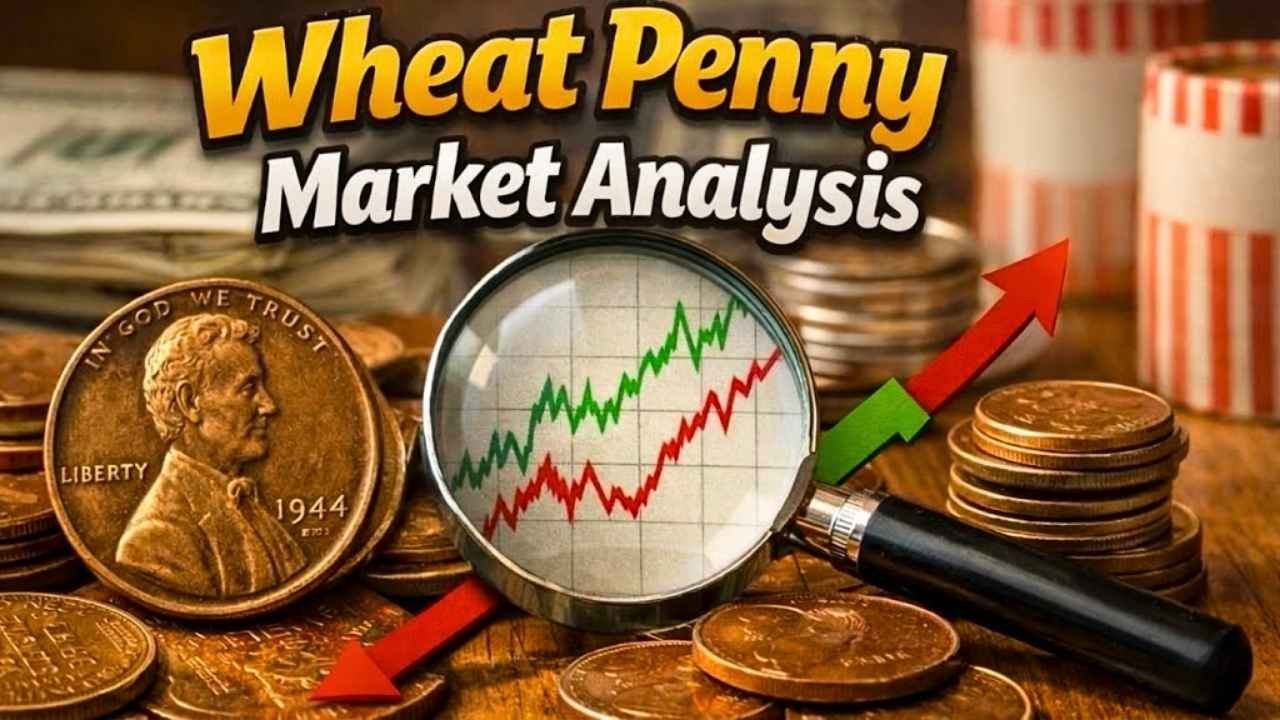
The Wheat Penny, officially known as the Lincoln Wheat Cent, remains one of the most beloved coins among collectors. First minted in 1909 to honor Abraham Lincoln’s centennial birthday, it features the iconic wheat stalks on the reverse that gave the coin its nickname. Even though production ended in 1958, Wheat Pennies continue to hold strong collector interest, with rare dates and varieties commanding impressive values. In 2026, the market for Wheat Pennies reflects a decade of evolving trends, investment interest, and renewed appreciation for classic American coinage.
Historical Background of the Wheat Penny
The Wheat Penny was designed by Victor David Brenner and introduced as the first U.S. coin to feature a real person rather than a symbolic figure. The obverse displays Lincoln’s portrait, while the reverse shows two wheat stalks framing the words “ONE CENT.” This design was intended to symbolize prosperity and agricultural strength. Over its nearly 50 years of production, the coin saw several minting variations and became a staple of everyday commerce.
Key Dates and Rare Varieties
Collectors focus heavily on certain key dates and varieties that stand out for rarity and value.
- 1909-S VDB: The most famous Wheat Penny, with limited mintage, often valued in the thousands.
- 1914-D: A scarce issue from Denver, highly prized in higher grades.
- 1922 No D: A variety where the Denver mint mark was accidentally omitted.
- 1931-S: A low mintage coin that remains a collector favorite.
- 1943 Steel Cents: Produced during World War II to conserve copper, these coins are unique and widely collected.
- 1955 Doubled Die Obverse: One of the most dramatic error coins, with doubled lettering visible to the naked eye.
Market Trends Over the Past Decade
Between 2016 and 2026, the Wheat Penny market has experienced notable shifts.
- Increased demand for high-grade coins, especially those certified by professional grading services.
- Rising interest in error coins, with dramatic varieties fetching record prices at auctions.
- Steady appreciation of key dates, particularly the 1909-S VDB and 1914-D.
- Renewed popularity among younger collectors due to online marketplaces and coin forums.
- Investment-driven purchases, with rare Wheat Pennies viewed as tangible assets in uncertain economic times.
Current Values in 2026
The value of Wheat Pennies varies widely depending on rarity, condition, and demand.
- Common circulated Wheat Pennies (1930s–1950s) are typically worth 5 to 50 cents.
- Uncirculated examples can range from $1 to $10 depending on grade.
- Key dates like the 1909-S VDB can reach $1,500 to $3,000 in mid-grade and much higher in pristine condition.
- Error coins such as the 1955 Doubled Die Obverse can sell for $5,000 to $20,000 depending on grade.
- Steel cents from 1943 remain affordable, often selling for $1 to $5, but pristine examples can command higher prices.
Collector Insights and Strategies
For collectors, the Wheat Penny offers both accessibility and challenge.

- Beginners can start by assembling a basic set from circulation finds or affordable purchases.
- Advanced collectors focus on completing date-and-mint sets, including rare varieties.
- Preservation is crucial; coins should be stored in protective holders to maintain condition.
- Professional grading adds credibility and enhances resale value.
- Market awareness is essential, as values fluctuate based on auction results and collector demand.
The Role of Online Marketplaces
Over the past decade, online platforms have transformed the way collectors buy and sell Wheat Pennies. Auction sites, coin forums, and dedicated marketplaces have made rare coins more accessible to a global audience. This has increased competition for key dates and errors, driving prices upward. At the same time, it has allowed new collectors to enter the hobby with ease, fueling long-term growth in demand.
Investment Potential
Wheat Pennies are increasingly viewed as a stable investment. Their historical significance, limited supply, and collector demand make them attractive to investors seeking tangible assets. While not every Wheat Penny carries high value, rare varieties and pristine examples have shown consistent appreciation over the past decade. As coin collecting continues to grow worldwide, Wheat Pennies are likely to remain a strong segment of the numismatic market.
Key Highlights
- Wheat Pennies were minted from 1909 to 1958 and remain highly collectible.
- Key dates such as the 1909-S VDB, 1914-D, and 1955 Doubled Die Obverse command premium values.
- Market trends from 2016 to 2026 show rising demand for high-grade and error coins.
- Common Wheat Pennies are affordable, while rare varieties can reach thousands of dollars.
- Online marketplaces have expanded access and increased competition among collectors.
- Wheat Pennies are increasingly seen as both collectibles and investment assets.
Final Words
The Wheat Penny continues to hold a special place in American numismatics. Its simple yet iconic design, historical significance, and range of rare varieties make it a timeless collectible. In 2026, the market reflects a decade of growth, with values rising for key dates and errors while common coins remain accessible to beginners. Whether collected for history, investment, or the thrill of discovery, Wheat Pennies offer something for everyone. Their enduring appeal ensures that they will remain a cornerstone of coin collecting for generations to come.